Each game inside a Canadian online casino has a built-in mathematical advantage for the operator. That advantage represents the house edge, and understanding it changes how a player handles real-money play. It is certainly not a hidden trick or a short‑term cheat. It represents a long‑term statistical expectation that ensures the casino stays profitable while still giving players a genuine chance to win. At Loonie Gold Casino, the entire game library functions on transparent house edge principles that favor informed decisions.
Numerous newcomers mix up the house edge with luck, but the two concepts are fundamentally different. Luck determines what happens in a single session or a handful of spins. The house edge explains what happens over millions of rounds. A player who understands this distinction ceases chasing losses and begins selecting games based on return‑to‑player percentages, volatility, and rule variations. The following sections break down exactly how the edge works across every major category available on the platform.
Playing on Mobile and the Uniformity of the House Edge
The house edge stays constant when a player moves from desktop to mobile. The game engine, the RNG, and the payout table remain identical across all devices. A blackjack hand dealt on an iPhone relies on the same mathematical model as one dealt on a desktop computer. The only variables that shift are the user interface and the convenience of access. Canadian players who prefer gaming on smartphones or tablets encounter the same odds as desktop users.
Mobile optimization impacts how clearly the house edge information is displayed. On a smaller screen, game rules and RTP figures might be buried in a menu rather than placed visibly. Players should make the effort to locate the information panel before committing real money. At Loonie Gold Casino, the mobile platform preserves full access to game details, including RTP percentages and rule variations, ensuring that players can make informed decisions regardless of their device.
The instant accessibility of mobile play introduces a behavioural factor worth considering. A player who can open a casino app in seconds is more likely to engage in short, frequent sessions. The house edge holds to each session independently, so the mathematics remain the same. However, increased frequency of play results in the long‑term edge manifests more quickly in calendar terms. Setting session time limits on mobile devices aids maintain the entertainment value without hastening the mathematical grind.
Banking Choices and Their Effect on Your Funds
Deposit management might seem unrelated to the house edge, but charges and conversion costs reduce a bankroll the same way a higher edge does. A player who puts in $100 and gives up 3% to a currency conversion fee has effectively surrendered a 3% edge before placing a single bet. Canadian players using Interac e‑Transfer typically escape these costs entirely, as transactions process in Canadian dollars with no conversion required. The money lands in the casino account at full value, prepared to deploy against the lowest‑edge games available.
Cashout pace also impacts the practical return on play. A casino that completes payouts within 24 hours for Interac users sends winnings to the player’s bank account quickly, where the money can accrue interest or be used for other purposes. Slow withdrawals that take five to seven business days produce an opportunity cost. Loonie Gold Casino has organized its payment operations to emphasize fast processing for Canadian banking methods, including Interac and select digital wallets common in the Ontario and British Columbia markets.
Crypto payments bring a different set of considerations. Bitcoin and Ethereum transactions skip traditional banking rails, often showing up in minutes with minimal network fees. However, the exchange rate between the cryptocurrency and the Canadian dollar fluctuates constantly. A player who deposits Bitcoin worth $200 might find it worth $195 or $205 by the time the transaction settles. That volatility functions like an additional house edge, though it can work in the player’s favour as often as not.
Regulation, Game Fairness Testing, and What This Means for the Edge
A casino’s licensing jurisdiction directly determines whether the stated house edge can be believed. Respected regulators demand that every game go through certification by an impartial testing laboratory. These labs run millions of rounds and check that the true RTP aligns with the theoretical figure within an acceptable statistical margin. When a Canadian player sees a 96.5% RTP on a slot at a duly licensed casino, that number has been externally confirmed.
Random number generator certification is just as important. The RNG is the software engine that controls every spin, deal, and dice roll. A certified RNG generates outcomes that are statistically indistinguishable from true randomness. Without this certification, a casino could theoretically manipulate the house edge beyond what the game rules specify. Canadian‑facing platforms operating under established international licences submit their RNG systems to regular audits, with the results present for player review.
Loonie Gold Casino operates under a framework that mandates regular third‑party testing of all game outcomes. The testing includes both the RNG integrity and the payout accuracy. Players who want to verify the fairness of a specific game can usually find the testing certificate and RTP report within the game’s information panel. This transparency is not universal across the industry, and it constitutes a meaningful difference between operators who value player trust and those who do not.
In what manner Slot Machines Build Their House Edge
Online slots develop their house edge differently from table games as the underlying mathematics are more intricate. A slot contains thousands or even millions of possible reel‑stop arrangements, each assigned to a specific payout. The game designer adjusts the frequency and size of wins to reach a target RTP. Unlike blackjack, where the player can impact the edge through choices, slots are purely random. The edge is determined in the programming and cannot be altered by any player action.
Volatility is the other half of the slot equation. A high‑volatility game with a 96% RTP might produce long dry spells punctuated by rare large wins. A low‑volatility game with the same RTP yields frequent small payouts that hold the balance steady. The house edge remains the same in both cases, but the player experience varies dramatically. Canadian players who comprehend volatility can match games to their session goals, whether they seek extended playtime or a shot at a life‑changing jackpot.
Progressive jackpot slots add an additional wrinkle. A portion of every wager feeds the growing jackpot pool, which means the base game RTP is often lower than a standard slot. The overall theoretical return might still be attractive, but the player gives up regular payouts for a chance at the top prize. At Loonie Gold Casino, the progressive jackpot selection includes titles where the pooled prize has achieved substantial sums, and the displayed RTP always shows the full game cycle including the jackpot contribution.
Promotions and How They Work With the House Edge
Casino bonuses affect the effective house edge by providing extra funds to the player’s bankroll. A 100% match bonus on a $200 deposit provides the player $400 to wager, which increases the number of bets before the expected loss hits the original deposit amount. However, wagering requirements apply conditions to those bonus funds. A 30x wagering requirement on a $200 bonus indicates the player must place $6,000 in bets before claiming any bonus‑related winnings.
The interaction between wagering requirements and the house edge establishes the true value of a bonus. On a game with a 2% house edge, $6,000 in wagers produces an expected loss of $120. If the bonus was $200, the player holds a theoretical $80 in value after meeting the requirements. On a game with a 5% edge, the expected loss climbs to $300, which exceeds the bonus amount entirely. Selecting low‑edge games for bonus play is the single most important factor in gaining value from promotional offers.
Game weighting further complicates the bonus equation. Most casinos apply different contribution percentages to different game categories. Slots might qualify 100% toward wagering requirements, while blackjack contributes only 10% or is excluded entirely. This weighting exists precisely because table games have a lower house edge. At Loonie Gold Casino, the bonus terms clearly list the contribution rates for each game type, enabling players to determine the most efficient path to fulfilling a bonus before they claim the offer.
How the House Edge Truly Means
The house edge represents the share of each wager the casino plans to hold over a massive number of bets. If a game has a 2% house edge, the theoretical return to the player is 98% of every dollar wagered over time. That does not mean a player loses exactly 2% of their bankroll in an hour. Short‑term variance can produce huge wins or complete wipeouts. The edge only becomes apparent after tens of thousands of rounds, which is why casual players often misinterpret its effect.
Mathematically, the edge resides inside the payout structure. When a roulette wheel pays 35‑to‑1 on a straight‑up number but the true odds of hitting that number are 37‑to‑1 on a European wheel, the gap between those two numbers is the house edge. The casino never needs to alter outcomes or manipulate software. The rules themselves create an unbeatable long‑term advantage. Regulated platforms like Loonie Gold Casino have their games independently tested to verify that the programmed edge matches the advertised theoretical return.
Canadian players should view the house edge as the cost of entertainment. Think of it like a greens fee at a golf course or a ticket to a live show. The difference is that casino games pay back a portion of the spend, sometimes more than the original stake. Understanding the edge enables players budget realistically. Someone who allocates $200 for an evening of blackjack with a 0.5% edge can expect far more playtime than someone putting the same amount into a high‑edge side bet.
In what manner Return‑to‑Player Percentages Correspond to the Edge
Return‑to‑player, shortened as RTP, is the opposite of the house edge. A slot with a 96% RTP has a 4% house edge. The two figures always add up to 100%. RTP is the more frequently advertised number in Canada, notably for online slots, because it sounds more attractive to players. Seeing a 97% RTP presented on a game tile seems more welcoming than reading about a 3% house edge, even though they represent identical mathematics.
RTP figures are always hypothetical averages determined over millions of simulated spins or hands. A game with a 96.5% RTP does not assure that a player will walk away with $96.50 from a $100 deposit. One session might produce 40% while another returns 200%. The RTP reflects the central tendency of the game engine, not the outcome of any individual sitting. Canadian regulators mandate that RTP figures be validated by accredited testing laboratories before a game can be made available to the public.
Players who emphasize RTP when choosing games give themselves a mathematically better starting position. open the site The gap between a 92% RTP slot and a 97% RTP slot is substantial over repeated play. The higher‑RTP game returns five extra dollars per hundred wagered, which accumulates into hundreds of extra rounds of entertainment. At Loonie Gold Casino, the game library covers a wide RTP range, and informed players can sort their choices toward the most advantageous percentages.
The impact of tactics in reducing the casino advantage
Strategy plays the biggest role in games where player decisions directly influence the outcome. Blackjack is the prime example. A player who applies basic strategy, a mathematically derived set of rules for every possible hand against every dealer upcard, can reduce the house edge to its bare minimum. Deviating from basic strategy raises the edge, often dramatically. Holding on a 16 against a dealer 7 might feel safer, but the math says hitting provides the player a better long‑term result.
Video poker fills a distinct position between slots and table games. The house edge on a full‑pay Jacks or Better machine can be as low as 0.46% with perfect play. However, that edge presupposes the player makes the correct hold decision on every single hand. A single mistake on a close hand like a four‑card flush versus a low pair increases the house advantage. Canadian players who spend time in learning video poker strategy charts can play games that rival the best table game odds.
Even in games with no decision‑making, strategic bankroll management serves as an indirect edge reducer. Establishing loss limits, selecting games with appropriate bet sizes for the bankroll, and leaving while ahead all lengthen playtime. The house edge erodes a bankroll more slowly when the player steers clear of chasing losses with larger bets. These habits do not alter the mathematics, but they affect how long a player can enjoy the game before the edge takes its expected toll.
House Edge Variations Across Table Games
Table games provide the largest house edge range of any casino type, and the specific rules at each table carry great weight. Blackjack played with favourable Canadian‑standard rules can have a house edge as low as 0.4% when the player uses perfect basic strategy. The same game with a 6‑to‑5 blackjack payout instead of 3‑to‑2 jumps to a 1.8% percentage. Rule variations on the same game title can increase the house advantage by a factor of four, so checking the table conditions before playing is vital.
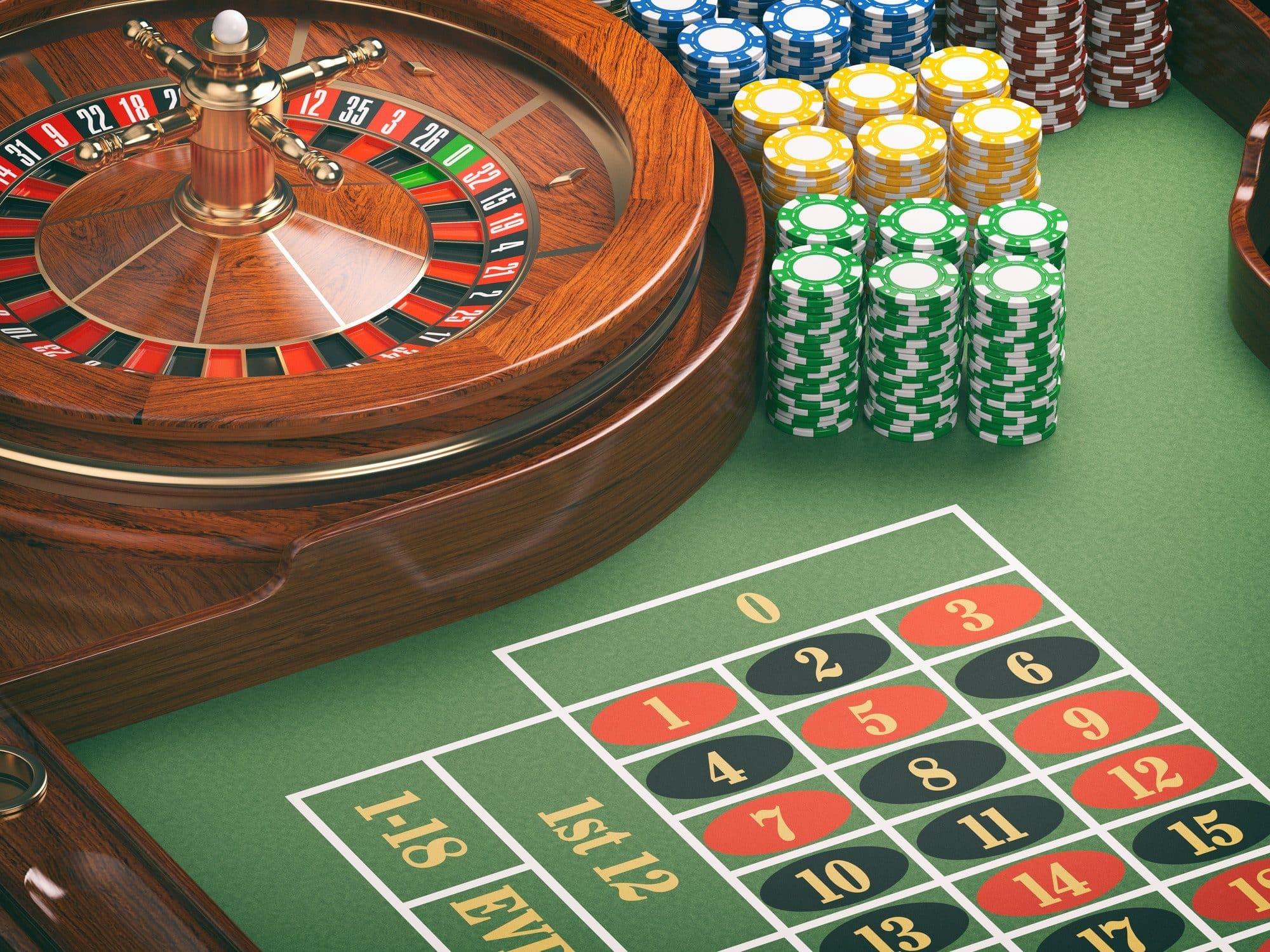
Roulette gives the clearest example of how a individual rule change alters the edge. European roulette with a single zero has a 2.7% house edge on many bets. American roulette includes a double zero, raising the edge to 5.26%. The added pocket does not change the payout rates, so the casino just receives a bigger mathematical portion. Canadian online casinos usually feature both variants, and the European version is consistently the better choice for players who wish to lengthen their funds.
Baccarat sits in a comfortable middle position looniegoldscasino.ca. The banker bet carries a 1.06% house edge after deduction, while the player bet is at 1.24%. The tie bet, in spite of its attractive 8‑to‑1 payout, carries a substantial 14.36% edge in the majority of standard editions. Craps provides a similar variety. The pass line bet has a 1.41% advantage, while some proposition bets in the middle of the table exceed 10%. The finest table game players know which bets to skip altogether.
Practical Steps to Apply House Edge Knowledge
The first practical step is to review the RTP or house edge of any game before wagering. This information is more available in the game rules or paytable section. If a slot does not indicate its RTP, a quick online search using the game title and “RTP” will often yield the figure from the developer’s official documentation. Players who form this a habit naturally move toward games that provide them a better mathematical deal.
The next step is to pair the game choice to the session goal. A player who seeks maximum playtime on a modest deposit should choose low‑edge, low‑volatility games. Blackjack with favourable rules, low‑volatility slots with high RTP, and full‑pay video poker all serve this purpose. A player chasing a large win and willing to accept faster bankroll depletion can consider higher‑volatility options, understanding that the edge stays the same but the path to the expected loss is steeper.
The final step is to regard bonuses as tools rather than gifts. Read the wagering requirements, look at the game weightings, and calculate the expected cost of clearing the bonus against the low‑edge games available. If the math adds up in the player’s favour, the bonus adds genuine value. If the requirements are too steep or the eligible games carry high edges, declining the bonus and playing with the deposit alone is often the smarter mathematical choice. Knowledge of the house edge converts bonus evaluation from guesswork into arithmetic.